Switzerland’s first community radio
Welcome to Radio Riesbach! This was Switzerland’s first neighborhood radio station, broadcasting from 1984 to 1991 from the first floor of the Gemeinschaftszentrum Riesbach in Zurich.
We’d like to give you a glimpse into this unique neighborhood station and shed some light on the era in which it emerged and the people who shaped it. Radio Riesbach produced 709 programs which have partly been preserved and digitised.
The links on this page take you directly to excerpts from selected programs. This will give you a sense of what the radio station and the neighborhood sounded like in the 1980s. You’ll also find a link to the Sozialarchiv Zürich website, where the entire preserved program archive is available.
A Radio From The Neighborhood
Switzerland’s first community radio station broadcast from the Gemeinschaftszentrum Riesbach between 1984 and 1991.
When Radio Riesbach first went on the air on April 1, 1984, it was met with doubt. The idea of a small community radio station was nice, but could it actually work? Absolutely! Over the next seven years, the station could be heard twice a week for one to two hours. Anyone who tuned their radio to the right frequency on Thursday evenings or Sunday afternoons could hear what was happening in the neighborhood. That’s because every broadcast began with the “Quartierjournal,” a roundup of the most important events and information for the area between Tiefenbrunnen, Bellevue, the lakefront, and Klusplatz.
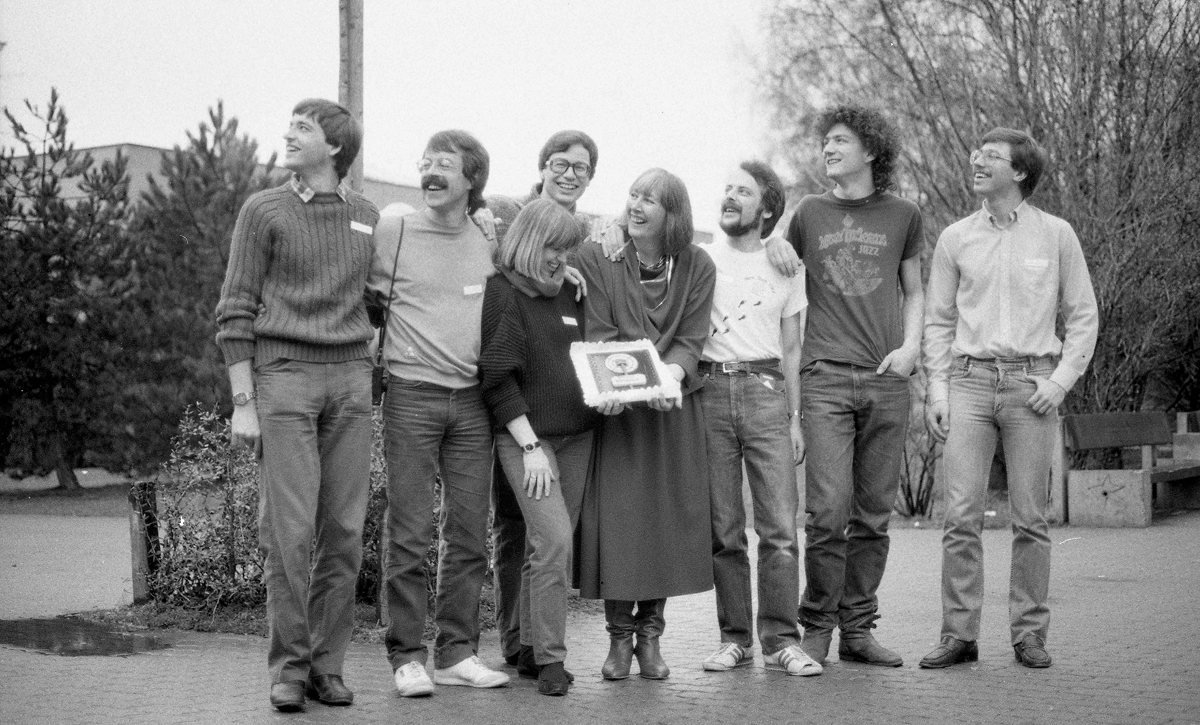
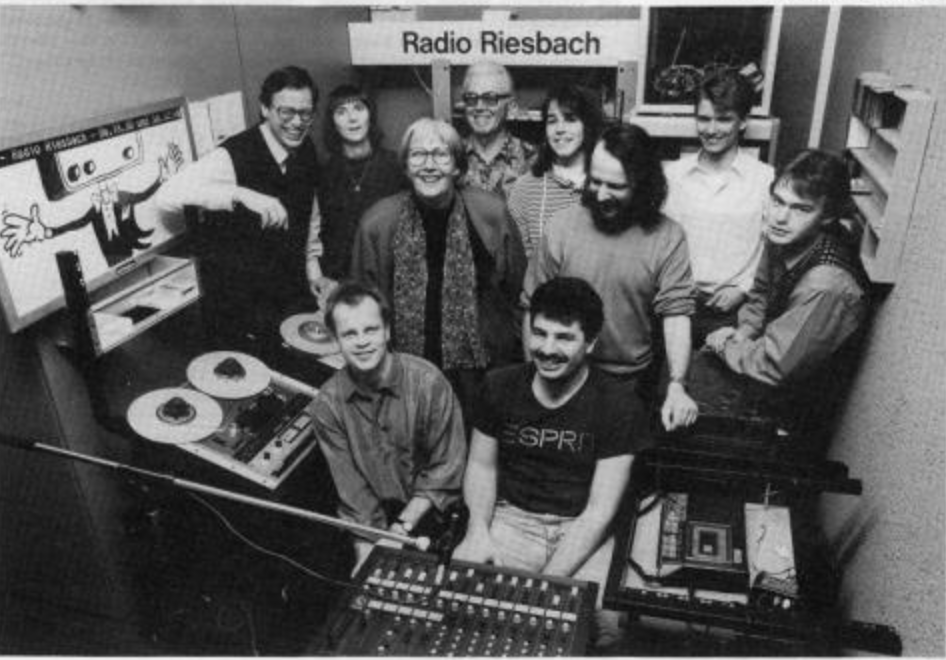
The programs were created by about a dozen neighborhood residents, some more involved than others, who, until then, had little to no broadcasting experience. Everyone worked for the radio station on a volunteer basis. There was an editorial group that met every two weeks to set the upcoming schedule. And a technical group that ensured all programs were properly recorded and broadcast. Radio Riesbach’s studio was located on the first floor of the Gemeinschaftszentrum, with the antenna on the rooftop.
The neighborhood radio station was supported by an association that had between 140 and 180 members over the years. The 30 francs each member paid annually were an important source of income, as Radio Riesbach was completely ad-free. In addition, there were donations, patron contributions, and earnings from flea markets and festivals. But finances were rather tight, as the radio station had to pay not only for operating and material costs but also for fees to use the broadcast frequency and to air music.
Radio Riesbach aspired to be a listener-driven radio station, from the neighborhood, by and for the neighborhood. The editorial team encouraged local residents to create their own programs with their assistance. Over the years, they experimented also with various formats. Radio Riesbach broadcast interviews and group discussions, recorded sounds from neighborhood walks, spoke with residents about their childhood in the neighborhood, and interviewed them on current topics right on the street. Sometimes they even broadcasted from outside the studio, from a meadow, the lakeside, or, during live broadcasts lasting several hours, from the “Swiss Radio and Television Exhibition” at the Zurich Kongresshaus.
The creators dreamed of expanding the Radio Riesbach model to other neighborhoods in the city. To do so, they intended to lend their broadcast frequency to other neighborhood radio stations on days when Radio Riesbach was not broadcasting. Unfortunately, the “Radio mobil” concept was never realized. And the desired level of participation from their own neighborhood also fell short of expectations. After the core team had searched in vain for new, dedicated radio voices, they announced in the spring of 1990 that they would not apply for a new broadcasting license. A few months before the station went off the air, all of the recording equipment was stolen, but the radio producers did not give up.
After 709 broadcasts, the Radio Riesbach team bid farewell to the airwaves at the end of March 1991 with a big closing party at the GZ. Fortunately, all the broadcasts were recorded, and some of them have been preserved. So today we can listen to what this unique radio project and the turbulent 1980s in the neighbourhood sounded like.
Record and broadcast
This is how the station's programming made its way from the studio at the GZ to homes in Riesbach.
Radio Riesbach's goal was to be a listener-focused station. That's why the radio producers repeatedly introduced their audience to the inner workings of their field: what the studio looked like, where the antenna was located, who the people behind the sound boards were, and the technical terms they used to communicate with one another.
Radio Riesbach was broadcast via ultra-shortwave (FM). In the second half of the 20th century, FM became the most important and widely used transmission medium for radio broadcasting in Switzerland. Compared to long, medium, and short waves, which had been used for radio broadcasting earlier, FM's reach is significantly smaller. However, the quality is generally better because the waves are less prone to interference. The number of available frequencies is limited, meaning that anyone wishing to broadcast via FM must apply to the government for a frequency license. This is exactly what Radio Riesbach did, and it was granted a so-called Konzession.
The transmission capacity of the Radio Riesbach antenna was regulated and limited to the area between Tiefenbrunnen, the lakefront, Bellevue, and Klusplatz. A complaint filed by the Swiss Post, Telephone, and Telegraph Administration (PTT; the state-owned company was responsible for broadcasting infrastructure at the time) shows that compliance with the regulations was monitored. However, the radio producers recall that Radio Riesbach could also be tuned in to on the other side of the lake.
Anyone with an older radio can still receive FM broadcasts today by tuning to the "FM" setting. For years, there has been discussion about ending FM operations in Switzerland and switching entirely to digital radio and internet radio. However, the originally planned end of FM service for late 2026 was recently postponed to 2031.
The Swiss Radio Experiment
The Riesbach community radio station had to adhere to strict rules and was subject to scientific monitoring. This was because it was part of a national pilot program. The Federal Council sought to determine whether and how private radio stations could operate in Switzerland.
Until the early 1980s, the only officially recognized radio stations in Switzerland were those belonging to the Swiss Radio and Television Corporation (SRG).
However, at least since the 1970s, so-called “pirate stations” had been increasingly challenging this monopoly. Dedicated radio producers “hijacked” existing broadcast frequencies to air their own programs and especially music until the stations were located, shut down, confiscated, or jammed by the authorities.
“Radio 24” received a great deal of attention in this context. Starting in 1979, the ad-supported music radio station broadcast from the summit of an Italian mountain, near the Swiss border, all the way to Zurich. In 1982, after years of a cat-and-mouse game with pirate stations and growing public pressure, the Swiss government decided to open the radio market to private providers in a carefully controlled manner. Interested parties could apply for one of the few available licenses: a temporary permit to broadcast as a private radio station in a specific area of Switzerland.
Many applied and one of the more than 200 applications came from the Riesbach neighborhood. And this application went through. By the summer of 1983, Radio Riesbach was one of 36 stations authorized to broadcast legally in Switzerland starting in the fall of that same year.
Listen
Get an idea of what Radio Riesbach and the neighborhood sounded like in the 1980s. Here you’ll find a selection of short audio clips that were broadcast between 1984 and 1991 – via a link below you can get to the archived version of the program and listen it in full length.
Griechischer Markt
An interview with a Greek resident who is actively involved in promoting cultural exchange in the neighborhood. She also discusses the challenges that non-German-speaking parents face in Switzerland.
Drogenauffangstation Tiefenbrunnen
A social worker describes the daily routine at the overnight shelter. Here, teenagers and young adults with substance abuse issues can spend the night, receive support, and have breakfast.
Riesbachtunnel
After more than a century in service, the Riesbach Tunnel is undergoing renovation. Two reporters ride the construction train into the tunnel at night and report directly from the construction site.
Häuserabbruch Höschgasse
The buildings at Höschgasse 72, 74, 76, and 78 are planned for demolition. Residents share what it’s like to live there and why they hope the buildings can be spared and renovated.
Heimatstrasse
Liz Mennel tells the story of Heimatstrasse and Eigenstrasse: how the neighborhood got its gas lamps and its own gasworks, and when and why Dufourstrasse was built.
Farewell Broadcast Of March 24, 1991
Radio Riesbach’s final broadcast was transmitted live from the Gemeinschaftszentrum Riesbach. A local TV station was there as well and filmed the event. Members of the Radio Riesbach team who speak are Liz Mennel, Beat Ramseier, Erwin Detsch, Peter Detsch, Dani Thyssen, and Stefan Schmid.